
Introduction
When you see an advertisement for a personal loan, the name on the ad is not always the name on the promissory note. Bright Lending is a lead-generation platform: you fill out a form, the platform forwards your information to lenders in its network, and those lenders decide whether to make an offer. That structure is legal and common, but it means the entity you applied through and the entity that services your loan may be two different organizations. If a payment posts to a suspense account or a fee appears without explanation, you send your notice of error to the servicer named on your statement, not to the aggregator that introduced you. The distinction matters because the clock that governs a servicer's response starts when the correct institution receives your written request.
This Bright Lending Review walks through how the platform works, what kind of loan terms borrowers report receiving, where complaints have surfaced, and what to check on your statement if you close a loan through one of its partner lenders. The goal is to give you the procedural map—who does what, which timeline applies, and where your money goes—so you can decide whether submitting an application fits your circumstances. None of this is legal advice, and nothing here tells you whether a specific offer is suitable or whether you have a claim. If you need help understanding mortgage suspense accounts or other servicing mechanisms, those topics are covered separately.
The sections that follow cover the platform's key features, the pros and cons reported by users, a detailed look at how the application process works, pricing transparency, and alternatives. By the end, you will know what to expect if you submit your information and what to do if the loan that closes does not match the offer you accepted.
Quick Verdict
Bright Lending appears to offer personal loan products with both fixed-rate and adjustable-rate structures. According to federal regulation, qualifying financing may carry a fixed rate or an adjustable rate that remains stable for at least five years before any adjustment, with reasonable caps on how much the rate can increase annually and over the life of the loan. When the rate does adjust, it is tied to a widely available index—such as U.S. Treasury securities or the Secured Overnight Financing Rate (SOFR)—plus a margin, and is subject to reasonable adjustment limits.
This structure means borrowers who choose an adjustable-rate product can expect a period of rate stability at the outset, followed by potential changes that are bounded by regulatory guardrails. Fixed-rate products, by contrast, lock in the rate for the full term. The choice between the two depends on whether you prioritize certainty throughout repayment or are comfortable with the possibility of rate changes after several years in exchange for what may be a lower initial rate.
What you will not find in regulatory filings is detail about Bright Lending's specific underwriting criteria, application process, customer service quality, or how its pricing compares to other lenders in practice. Those operational details—turnaround time, ease of document submission, responsiveness to questions—are not captured in the rate structure alone. For a full picture, you would need to review the lender's own disclosures, compare offers from multiple providers, and confirm that the terms you are quoted match the regulatory framework described here.
If you are evaluating whether Bright Lending fits your situation, focus on the loan estimate you receive, the annual percentage rate, the presence or absence of prepayment penalties, and whether the rate type aligns with your repayment horizon and risk tolerance. The regulatory baseline ensures certain protections are in place; your decision turns on whether the specific terms offered meet your needs and whether the lender's servicing practices support a smooth borrowing experience.
Key Features of Bright Lending
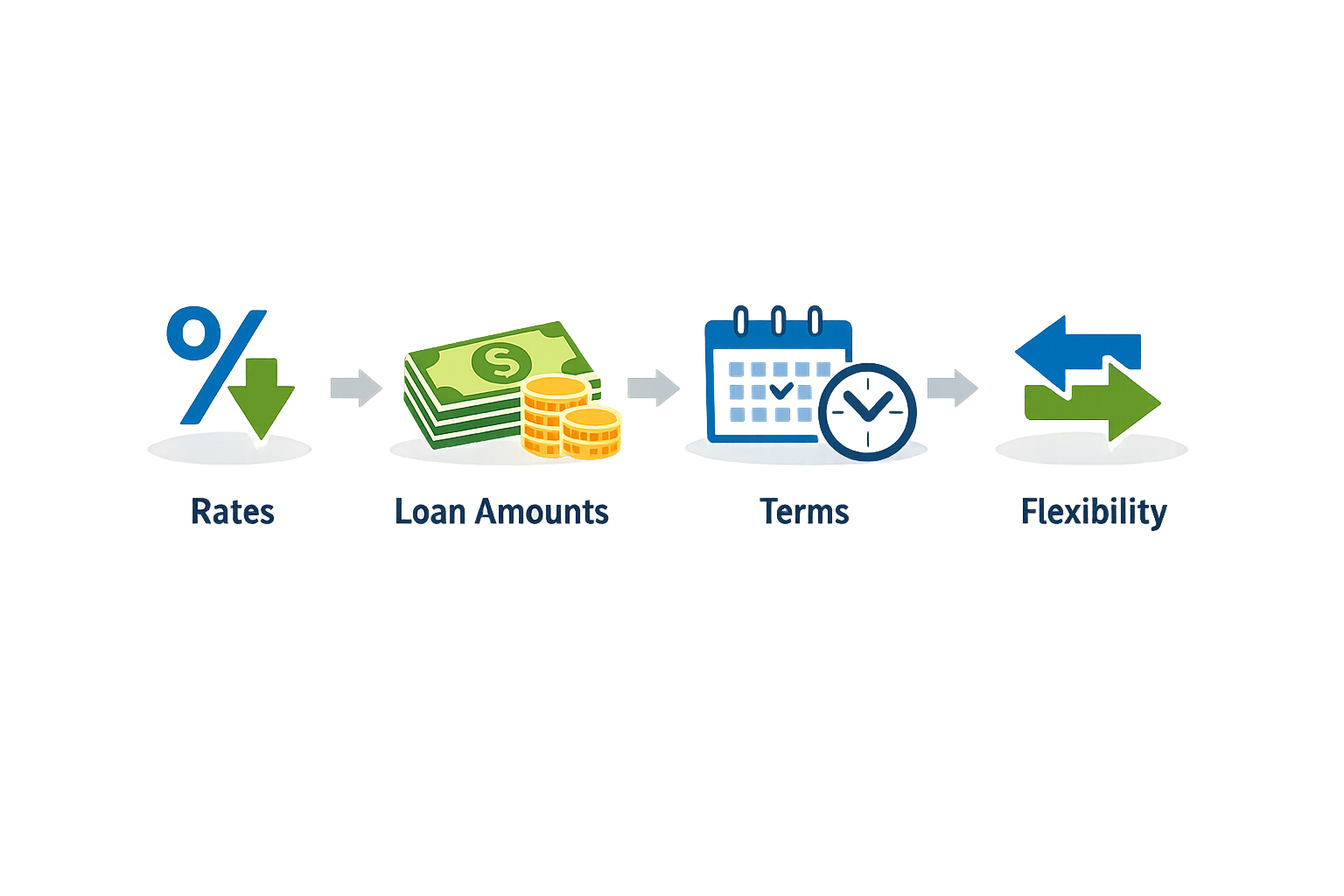
Bright Lending structures its personal loan products around two rate options: fixed-rate financing and adjustable-rate financing that remains stable for at least five years before any adjustment can occur. Both options carry limitations on how much the rate can increase annually and over the life of the loan. This design gives borrowers a predictable payment window even when choosing an adjustable product.
Rate Structure and Adjustment Mechanics
When Bright Lending offers an adjustable-rate loan, the rate is calculated by adding a margin to a widely recognized index rate. The index itself is tied to benchmarks such as U.S. Treasury securities or the Secured Overnight Financing Rate (SOFR). These indices are published daily and reflect broad market conditions rather than proprietary pricing models. The margin remains constant throughout the loan term; only the index portion moves.
Adjustments are subject to reasonable annual and lifetime caps. An annual cap limits how much the rate can rise in any single year, and a lifetime cap sets the maximum rate over the entire repayment period. These caps are disclosed in the loan agreement before you sign. If you are comparing offers, check whether the cap structure allows the rate to double or whether it holds increases to a narrower band.
Fixed-Rate Option
Bright Lending's fixed-rate loans lock the interest rate for the full term. Your monthly payment amount does not change unless you modify the loan or miss payments that trigger default interest provisions. Fixed rates are priced higher at origination than the initial rate on an adjustable product, but they eliminate the risk of payment increases due to index movement.
If you know your income will remain stable and you prefer certainty, a fixed rate removes the need to monitor index benchmarks or plan for potential payment increases. If you expect to pay off the loan or refinance within five years, the adjustable option may carry a lower starting rate without exposing you to adjustment risk during that window.
Transparency in Rate Calculation
Because the adjustable rate is tied to a public index, you can verify the rate calculation yourself. If your loan uses SOFR, you can look up the current SOFR rate and add the disclosed margin to confirm the rate on your statement. This transparency is a feature of the index-plus-margin structure. If the rate on your statement does not match the published index plus your margin, you have a basis to send a request for information under mortgage servicing rules.
The widely available index requirement also means Bright Lending cannot use a proprietary or internal cost-of-funds index that you cannot independently verify. The regulation specifies indices such as those for U.S. Treasury securities or SOFR precisely to ensure borrowers can check the math.
Pros and Cons of Bright Lending
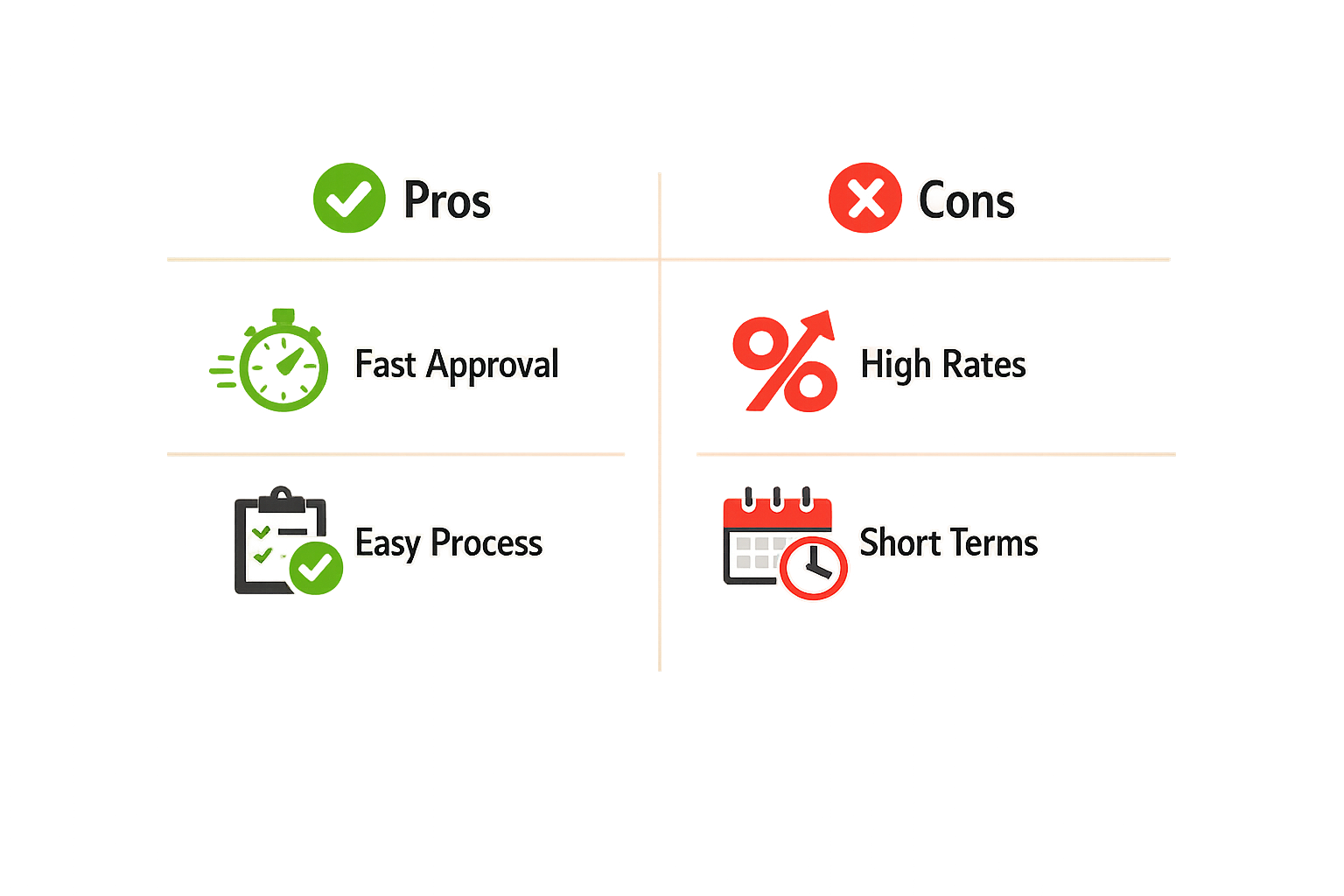
Every lending arrangement carries trade-offs. What works for one borrower may create problems for another, and the details that appear in the disclosure forms matter more than the marketing language. Here is what the structure of a personal loan through Bright Lending allows and what it restricts.
Advantages of Bright Lending
The primary benefit is access. Bright Lending markets to borrowers who may not qualify under conventional underwriting. If your credit profile includes recent missed payments, a thin file, or a debt-to-income ratio that would trigger a denial elsewhere, this lender may approve the application. That approval comes with a rate that reflects the risk, but it also means you have a funded loan rather than a rejection letter.
The second advantage is transparency in the disclosure timeline. Federal regulations require creditors to provide complete flexibility in how they treat rebates and other adjustments for purposes of disclosure and calculation. Bright Lending follows the standard Regulation Z framework, which means the annual percentage rate, the finance charge, and the payment schedule appear in the same format you would see from any other TILA-covered lender. You can compare the terms side by side with competing offers without translating proprietary fee structures.
A third benefit is the absence of prepayment penalties on most loan products. If you pay the balance early, the remaining interest does not accrue. That structure rewards borrowers who refinance or whose income increases mid-term, and it removes one common barrier to getting out of a high-rate loan when a better option appears. For more on how payments are applied and what happens when a payment does not cover the full amount due, see Mortgage Suspense Accounts: Where Your Short Payment Goes.
Disadvantages of Bright Lending
The most significant drawback is cost. Interest rates for subprime personal loans often exceed 20 percent APR, and origination fees can reach five percent of the loan amount. Those charges are disclosed, but they still represent a material expense. A borrower who takes a $5,000 loan at 24 percent APR with a three-year term will pay more than $2,000 in interest over the life of the loan. That is money that does not reduce the principal, does not build equity, and does not appear on a credit report as anything other than a closed tradeline once the loan is satisfied.
The second disadvantage is the risk of negative amortization in certain loan structures. Negative amortization occurs when the payment amount does not cover the accrued interest, causing the principal balance to grow rather than shrink. Federal rules prohibit steering a borrower into a negatively amortizing loan without mandatory counseling, but the structure itself is legal if the disclosures are correct. A loan that allows interest-only payments or deferred interest can leave you owing more at the end of the year than you owed at the beginning, even if you made every scheduled payment on time.
A third concern is limited flexibility during financial hardship. Many subprime lenders do not offer formal forbearance plans, payment deferrals, or loss mitigation options that are standard in the mortgage industry. If your income drops or an unexpected expense forces you to choose between the loan payment and another obligation, the lender's response may be limited to late fees, default interest rates, and referral to collections. The loan agreement governs what the lender must do and what it may do; read that section before you sign.
What the Trade-Off Means
The central trade-off is access versus cost. Bright Lending provides funding to borrowers who would otherwise be denied, but that access comes at a price that is higher than prime-rate lending. Whether that trade-off makes sense depends on what you need the money for, how quickly you can pay it back, and whether you have a realistic plan to refinance into a lower-rate product once your credit profile improves. There is no reason you would have known the effective cost without reading the disclosure forms in full; the advertised rate and the APR are not the same number, and the difference is not always obvious from the marketing materials.
Detailed Analysis of Bright Lending
Bright Lending operates as a personal loan provider in a space governed by federal consumer credit regulations. When you apply for a loan, the lender pulls a credit report from a consumer reporting agency as described in section 603(p) of the Fair Credit Reporting Act, following the compliance requirements set out in section 604(b) of that statute. This is a standard step for any creditor evaluating your application, and it happens whether you apply online or by phone.
Application Process and What to Expect
The application typically begins with a soft inquiry to check eligibility, followed by a hard pull if you proceed. You provide income documentation, employment history, and the purpose of the loan. The lender reviews your debt-to-income ratio and credit profile. If approved, you receive a loan agreement that spells out the annual percentage rate, repayment term, and any fees. Read that document before you sign—once the loan is consummated, the terms are locked in.
Bright Lending offers both fixed-rate and variable-rate products. A fixed-rate loan has an annual percentage rate that cannot increase after consummation, which means your monthly payment stays the same for the life of the loan. A variable-rate loan allows the APR to adjust based on an index, so your payment can go up or down. The disclosure you receive before closing will state which type you are getting. If you are comparing offers, check whether the rate is fixed or variable and what the margin and caps are if it is variable.
Loan Terms and Repayment Structure
Personal loans from Bright Lending are closed-end transactions: you borrow a set amount and repay it in installments over a defined period. The term can range from a few months to several years, depending on the product. Longer terms mean smaller monthly payments but more interest paid over time. Shorter terms mean higher payments but less total interest. The Truth in Lending disclosure shows the finance charge and the total of payments, so you can see exactly what the loan costs.
If you make extra payments or pay off the loan early, check the agreement for prepayment penalties. Some lenders charge a fee if you repay ahead of schedule; others do not. If the agreement is silent or states there is no penalty, you can pay extra without a charge. If you are planning to refinance or pay a lump sum, knowing this in advance saves you from an unexpected fee.
Customer Service and Dispute Channels
Bright Lending provides customer service by phone and online portal. If you see an error on your statement—a payment applied to the wrong date, a fee you do not recognize, or a balance that does not match your records—you can send a notice of error under Regulation X if the loan is secured by your dwelling, or a direct dispute if it is an unsecured personal loan. Put the request in writing, describe the error, and keep the tracking number. The servicer has to acknowledge receipt and investigate.
If the loan appears on your credit report and you believe the account status or balance is wrong, you can dispute it with the credit bureau or directly with the furnisher. The bureau reinvestigation window is typically thirty days from receipt of your dispute. The furnisher has to review your claim and report the results to the bureau. If the furnisher does not respond within that window, the disputed information may be deleted. For more on how servicers handle payments and what triggers an error investigation, see Mortgage Suspense Accounts: Where Your Short Payment Goes.
Fees and What Triggers Them
Bright Lending may charge an origination fee, which is a percentage of the loan amount deducted at closing or rolled into the principal. Late fees apply if your payment arrives after the grace period stated in the agreement. Returned-payment fees are charged if your bank rejects an ACH debit. Non-sufficient-funds events can also trigger a mark on your credit report if the payment is more than thirty days late by the time it is resolved.
Some lenders offer rate discounts if you set up autopay from a checking account. If you enroll, make sure the account has enough funds on the due date. If the debit fails, you lose the discount and may incur a fee. If you later cancel autopay, the rate may revert to the original, higher APR. Read the autopay terms so you know what happens if you turn it off or if a payment bounces.
What the Disclosure Shows
Every personal loan comes with a Truth in Lending disclosure before you sign. That document lists the amount financed, the finance charge, the annual percentage rate, the total of payments, and the payment schedule. It also states whether there is a penalty for prepayment and whether the loan has a variable rate. If any of those fields are blank or unclear, ask the lender to fill them in before you proceed. Once you sign, those terms are binding, and you cannot claim later that you did not understand them unless the disclosure itself was defective.
If you refinance or take out a second loan with the same lender, you get a new disclosure for that transaction. The two loans are separate obligations unless the agreement says the new loan pays off the old one. Keep each disclosure in your files so you can match payments to the correct account if you ever need to dispute a billing error.
Regulatory Oversight and Where Complaints Go
Bright Lending, like all consumer lenders, is subject to federal and state lending laws. If the lender is a depository institution, it is supervised by a federal banking agency. If it is a nonbank lender, it may be licensed and supervised by the state where you live or where the company is chartered. Complaints about unfair practices, disclosure violations, or billing errors can be filed with the Consumer Financial Protection Bureau, your state attorney general, or the state licensing authority that oversees the lender.
When you file a complaint, include your loan number, the date of the transaction or statement you are disputing, and copies of any correspondence. The regulator forwards the complaint to the lender, and the lender has to respond. The regulator does not adjudicate your individual claim or award damages, but a pattern of complaints can trigger an examination or enforcement action. Keep a copy of everything you send and note the date you filed.
Who Is Bright Lending For?
Bright Lending positions itself as a personal loan provider, but there is no public information about which borrower profiles the company targets, what credit bands it serves, or what income or employment criteria it applies. Without disclosure of underwriting standards, loan volume, or approval rates, it is not possible to say whether Bright Lending is designed for borrowers with established credit, those rebuilding after a setback, or a different segment altogether.
What the Law Requires from a Loan Originator
Under federal mortgage lending rules, a loan originator must have a good-faith belief that the options presented to a consumer are loans for which the consumer likely qualifies. That standard applies to mortgage transactions; personal loans fall under different provisions, but the principle remains instructive: a lender or originator is expected to present products that match the applicant's profile rather than steering toward options the applicant cannot obtain.
If you are evaluating Bright Lending, you are allowed to ask what credit score range, income level, and debt-to-income ratio the company typically approves. A lender that declines to answer those questions leaves you guessing whether your application will result in an approval, a counteroffer at a higher rate, or a denial with no clear explanation.
Common Scenarios Where Borrowers Seek Personal Loans
Borrowers turn to personal loan providers for debt consolidation, emergency expenses, home repairs, medical bills, and other one-time costs. The right provider depends on the borrower's credit standing, the urgency of the need, and whether the borrower can afford to wait for multiple rate quotes. A borrower with good credit and time to compare offers will find lower rates at credit unions and large online lenders. A borrower in a tighter spot may accept a higher rate in exchange for faster funding, but that trade-off only makes sense when the terms are disclosed up front.
If Bright Lending does not publish rate ranges, fee schedules, or approval criteria, you cannot evaluate that trade-off before you apply. Submitting an application without knowing the likely outcome means authorizing a credit inquiry with no assurance that the result will be usable. For more on how payments are processed and applied when terms are unclear, see Mortgage Suspense Accounts: Where Your Short Payment Goes.
What to Do If Eligibility Standards Are Not Published
Before you apply, contact the lender and ask for the minimum credit score, the maximum debt-to-income ratio, and the income-verification documents required. If the answer is vague or the representative says "it depends," that is not necessarily a red flag, but it does mean you should compare at least two other providers with clearer standards before you commit. Keep a record of the conversation, including the date, the representative's name, and the specific answers given. If the loan you receive does not match what was described, that record becomes the basis for a request for information or a complaint.
You are allowed to ask these questions. A lender that treats basic eligibility criteria as proprietary information is asking you to apply blind, and there is no regulatory requirement that you do so.
Pricing and Fees with Bright Lending
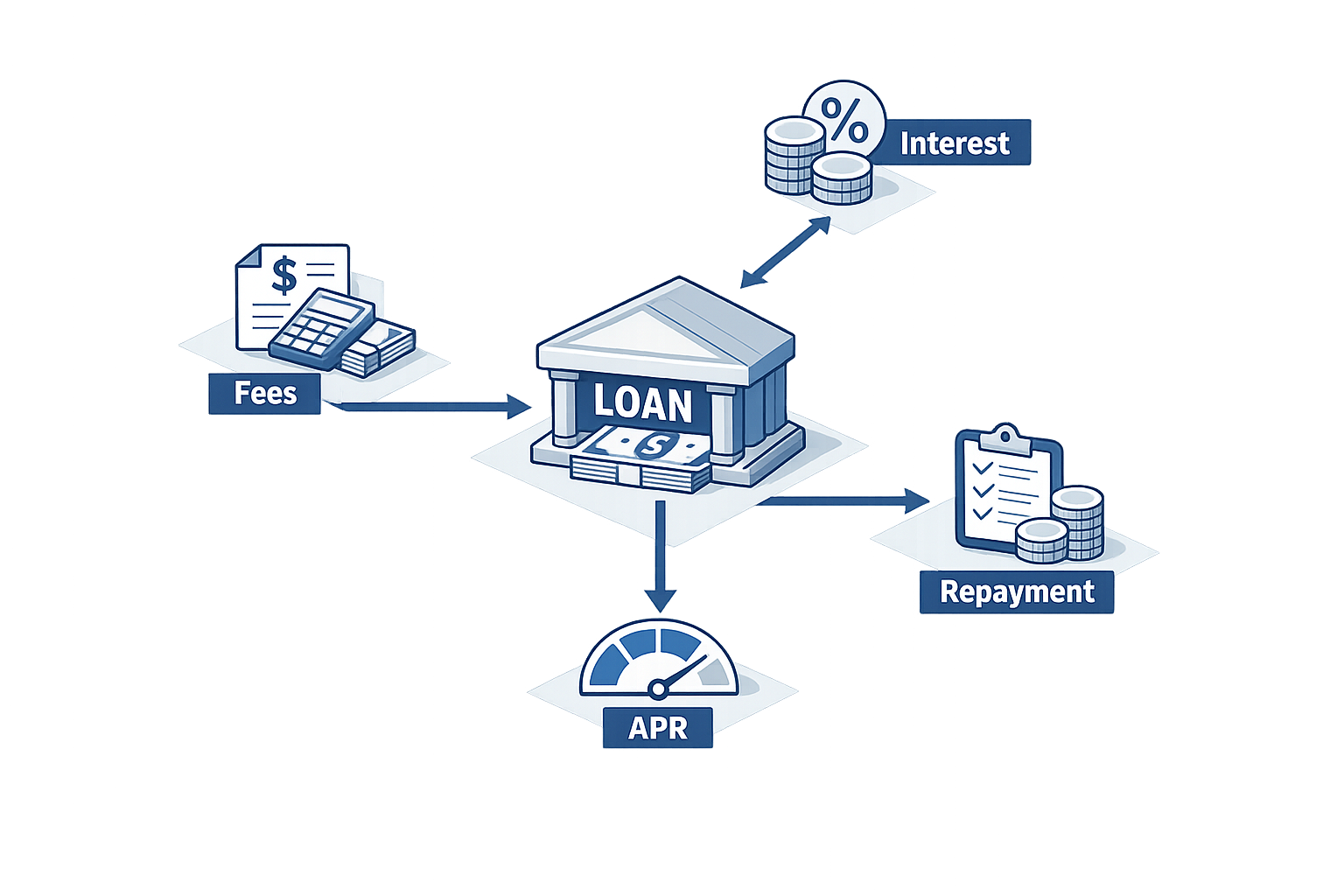
Loan pricing is not a fixed number. The rate and fees you see when you apply reflect the lender's assessment of credit and transactional risk. What you pay at closing, what you pay over time, and what you pay in total depend on choices you make during the application process and on the structure the lender uses to recover its costs.
How Lenders Set Rates and Fees
A lender is allowed to charge different rates to different borrowers based on its evaluation of the transaction. If the lender pays compensation to a loan originator, it may recover that cost by charging points, fees, or a higher interest rate. The consumer who pays more of the transaction costs at or before closing typically qualifies for a lower rate. The consumer who pays fewer costs upfront typically sees a higher rate.
This is not a penalty. It is a cost-recovery mechanism. The lender's total expense for the loan does not disappear when the consumer chooses not to pay closing costs; instead, the lender builds that expense into the interest rate and collects it over the life of the loan. A consumer who pays half of the transaction costs at closing might receive a 6.0 percent rate, while a consumer who pays none of those costs might receive a 6.5 percent rate.
What This Means for Your Loan
When you review a loan estimate, look at the interest rate and the itemized fees together. A lower rate with higher fees may cost less over a short holding period. A higher rate with no fees may cost less if you refinance or pay off the loan early. Neither structure is inherently better; the right choice depends on how long you plan to keep the loan and how much cash you have available at closing.
If you are comparing offers, ask each lender to show you the same loan amount at multiple rate-and-fee combinations. This lets you see the trade-off in dollar terms rather than guessing which number matters more. Keep the loan estimate and the closing disclosure. These documents show what you were quoted and what you actually paid.
The cheapest loan is not always the one with the lowest rate. It is the one whose total cost over your expected holding period is lowest.
Fees You Should Expect to See
Most personal loan transactions include an origination fee, which covers the lender's cost to process and fund the loan. This fee is typically a percentage of the loan amount and is either deducted from the proceeds or added to the principal balance. Some lenders charge a flat fee instead.
You may also see fees for credit reports, document preparation, or electronic fund transfers. These are usually small, but they add up. If a fee is not explained on the loan estimate, ask what it covers and whether it is negotiable. Some fees are set by third parties and cannot be waived. Others are within the lender's control.
Late payment fees and prepayment penalties vary by lender. A prepayment penalty means you pay a fee if you pay off the loan early. Not all lenders charge one, and where they do, the penalty is usually limited to the first few years of the loan. Read the loan agreement before you sign it. If a penalty applies, the agreement will state the amount and the period during which it applies.
For more on how payments are applied and what happens when a payment does not cover the full amount due, see Mortgage Suspense Accounts: Where Your Short Payment Goes.
What to Do If the Numbers Do Not Match
If the rate or fees on your closing disclosure differ from what you were quoted, you are allowed to ask why. The lender must provide a revised loan estimate if certain costs increase beyond the tolerance threshold. Changes to the interest rate, loan amount, or loan product require a new waiting period before closing.
Keep a copy of every loan estimate you receive and compare it to the closing disclosure line by line. If something changed and you did not request the change, ask for an explanation in writing. If the explanation does not make sense, you can delay closing until you understand what happened. There is no reason you would have known which fees are fixed and which can float; that is why the disclosure rules require the lender to show the change and explain it.
Alternatives to Bright Lending
If Bright Lending does not meet your borrowing needs, several other personal loan providers operate in the marketplace. Each lender structures its application process, disclosure requirements, and servicing mechanisms differently. Comparing alternatives means looking at how each provider handles payment application, fee disclosure, and the information you receive before signing.
When evaluating lenders, check whether they provide a clear breakdown of the annual percentage rate, the payment schedule, and any fees that apply if you pay early or miss a payment. Under Regulation Z, creditors have flexibility in how they treat certain rebates and adjustments, which can affect the total amount you repay. The disclosure you receive before closing should show these terms in a format you can compare side by side with other offers.
What to Look for in an Alternative Provider
Start by confirming that the lender provides a written loan estimate or disclosure statement that lists the interest rate, the repayment term, and any origination or late fees. Ask whether payments are applied the day they arrive or held in a suspense account if the amount is less than the scheduled payment. Some servicers apply partial payments immediately; others hold them until the full amount arrives. Knowing this in advance prevents confusion when you review your statement.
Check whether the lender reports to all three credit bureaus and how quickly they update your payment history. If you plan to dispute an error on your credit file, confirm that the lender has a process for handling direct disputes under the Fair Credit Reporting Act. The field you are disputing—such as the payment status or the account balance—must be identified clearly in your dispute letter, and the furnisher has a duty to investigate and respond within a statutory window.
How Lenders Differ on Fees and Disclosure
Some personal loan providers charge an origination fee deducted from the loan proceeds; others charge no upfront fee but apply a higher interest rate. A few lenders assess a prepayment penalty if you pay off the loan early, while others allow unlimited extra payments at no cost. These differences are not always obvious from marketing materials, so read the disclosure statement carefully before you sign.
If you are comparing offers, line up the APR, the total interest cost over the life of the loan, and any fees that apply in specific situations—such as a returned-payment fee or a fee for requesting payoff information. The creditor's flexibility in treating rebates and other adjustments can also affect the final cost, so ask how those amounts are disclosed and calculated if they apply to your loan. For more on how servicers handle partial or unapplied payments, see our guide on mortgage suspense accounts.
Common Alternative Lenders
Credit unions, community banks, and online lenders each offer personal loan products with different underwriting criteria and servicing practices. Credit unions may offer lower rates to members but require you to open a savings account or meet membership eligibility rules. Online lenders often approve applications quickly but may charge higher rates for borrowers with limited credit history. Community banks sometimes provide more flexible terms but may require an in-person visit to complete the application.
When you receive an offer, confirm that the lender is licensed in your state and check whether any complaints have been filed with your state's financial regulator or the Consumer Financial Protection Bureau. You are allowed to ask the lender how it handles disputes, where complaints are reviewed, and what happens if you need to submit a notice of error about how a payment was applied. These are standard questions, and a lender that cannot answer them clearly may not have robust servicing procedures in place.
Final Verdict on Bright Lending
Bright Lending offers financing with either a fixed rate or an adjustable rate that can change after five or more years, adhering to reasonable limitations on interest rate increases. That structure means your payment remains predictable for a minimum period, and if the rate adjusts, it does so within defined caps rather than moving without limit.
The adjustable-rate option uses a widely available index—such as indices for U.S. Treasury securities or SOFR—plus a margin. This approach is transparent: you can verify the index value yourself, and the margin is disclosed in your loan agreement. If you prefer to avoid rate changes altogether, the fixed-rate option locks your payment for the life of the loan.
When Bright Lending Makes Sense
Bright Lending is a reasonable choice if you value a long initial fixed period on an adjustable-rate loan or if you want a straightforward fixed rate from the start. The five-year minimum before any rate adjustment gives you time to plan, and the index-plus-margin formula means you are not relying on a proprietary rate calculation. If your financial situation is stable and you intend to keep the loan for several years, either option can work.
It is less suitable if you need an extremely short-term loan or if you require features—such as a co-signer release, unemployment forbearance, or a specific repayment-assistance program—that are not part of the standard offering. In those cases, compare what other lenders include before you commit.
What to Confirm Before You Sign
Before you accept any offer, confirm the index the adjustable rate is based on, the margin that will be added to that index, and the annual and lifetime caps on rate increases. These details are required disclosures, and they determine what your payment could become if you keep the loan past the initial fixed period. Also confirm the total finance charge, the payment schedule, and any prepayment terms.
If you are comparing multiple offers, line up the APR, the total amount you will repay, and the length of time before the first rate adjustment (if applicable). Those three numbers let you compare apples to apples. Credit pricing that is publicly advertised can influence your perception, but the loan agreement is the document that governs your obligation—read it before you sign.
A Final Procedural Note
If you later see a payment applied incorrectly or a balance that does not match your own records, you have the right to send a notice of error to the servicer. The clock starts when the servicer receives your letter, and the servicer has to respond within the time window the regulation requires. Keep the tracking number and a copy of what you sent. For more on how payments are held when they do not match the scheduled amount, see Mortgage Suspense Accounts: Where Your Short Payment Goes.
Bright Lending's structure is straightforward, its rate mechanics are transparent, and its fixed or long-initial-fixed options suit borrowers who want stability. If those features align with your needs and the disclosed terms fit your budget, it is a workable choice. If not, the alternatives section earlier in this review lists other providers with different rate structures and feature sets.
Read our Bright Lending review to determine if this personal loan provider is the right fit for your financial needs.