
Introduction
A credit monitoring service watches your credit file and sends alerts when something changes. The change might be a new account, a balance update, a hard inquiry or a public record. The alert arrives by email or app notification, usually within a day or two of the bureau recording the activity. What the service does not do is fix errors, remove negative items or improve your score directly.
One common misconception is that monitoring services can delete negative items from your credit report. The statutory text does not support that claim. The section typically cited pertains to disclosure, not deletion. If you find an inaccuracy, you must follow the dispute process outlined under Regulation V, which governs the accuracy of furnished information. This regulation ensures that your disputes are investigated, but it does not guarantee the removal of items unless they are proven inaccurate.
Monitoring is a notification tool. It tells you when activity happens so you can decide whether the activity is yours. If a new credit card appears and you did not open it, the alert gives you a head start on reporting fraud. If a balance is reported incorrectly, the alert tells you which account to review. The service does not adjudicate the dispute or contact the furnisher on your behalf — that is your responsibility. For guidance on how to improve your credit score through accurate reporting and timely payments, see the linked resource.
The services vary in which bureaus they monitor, how quickly they send alerts, and what additional features they include. Some monitor one bureau, others monitor all three. Some include identity theft insurance or dark web scans. Some provide access to your credit score or report; others only send alerts when something changes. The right service depends on what you need to know and how quickly you need to know it. This article compares the options so you can choose the one that matches your situation.
Explore credit monitoring services compared to find out which one offers the best protection for your credit score.
Detailed Reviews of Top Credit Monitoring Services
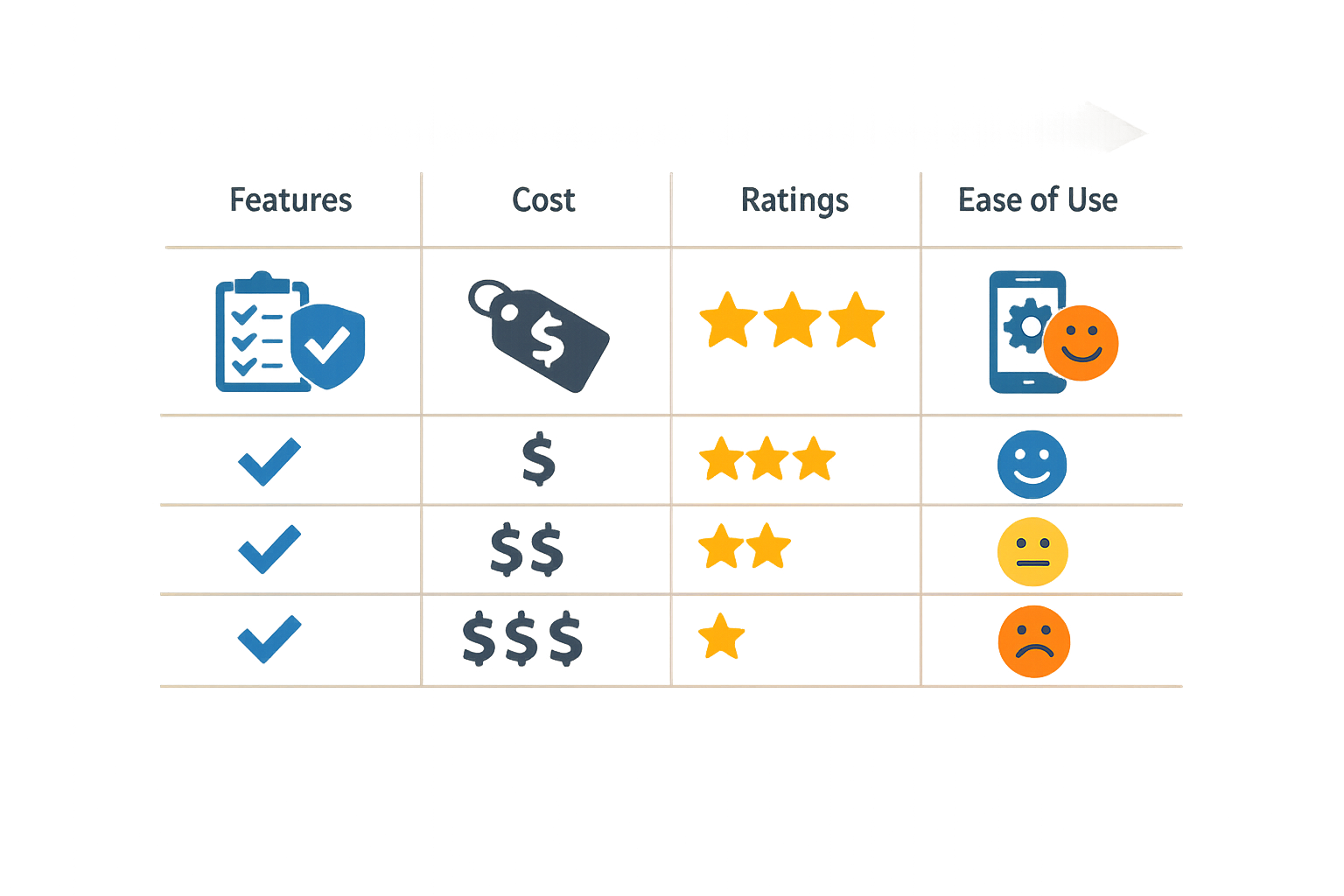
This section examines what credit monitoring services offer and how they differ. The features described here are based on what services typically provide: alerts, access to credit information, and account management tools. None of the services reviewed can remove accurate information from your credit file. That is not what monitoring does.
What Credit Monitoring Services Do
A credit monitoring service tracks changes to your credit file and sends alerts when new activity appears. Some services pull data from one bureau; others pull from all three. The alert arrives by email, text, or app notification. What you do with that alert is up to you.
Services may also describe optional payment methods—telephone payments, automatic account withdrawals, or mobile app access. These are account features, not credit-repair tools. The service does not negotiate with creditors or dispute items on your behalf unless it explicitly states otherwise in the terms.
Features That Appear Across Providers
Most credit monitoring services include:
- Alerts for new accounts, inquiries, or delinquencies. The alert tells you what changed. You decide whether the change is accurate.
- Access to credit scores. Some services show a FICO score; others show a VantageScore. The two scoring models use different ranges and weightings. Check which model the service uses and whether lenders in your market rely on that model.
- Identity theft insurance. This is reimbursement coverage for certain costs if you become a victim of identity theft. It is not credit repair. Read the policy to see what is covered and what the deductible is.
- Customer support. Some services offer 24-hour support by phone or chat. Others limit support to business hours or email only. If you need help reading an alert or understanding a score change, check whether live support is available.
For a broader look at how to protect your bank account from fraud, see the linked resource. Monitoring is one layer; account security practices are another.
Pricing and Subscription Terms
Credit monitoring services charge monthly or annual fees. The fee structure varies:
- Single-bureau monitoring is usually the least expensive option. You see alerts from one bureau only. If a creditor reports to a different bureau, you will not see that change.
- Three-bureau monitoring costs more. You receive alerts from Equifax, Experian, and TransUnion. This is the most comprehensive option if you want to see all reporting activity.
- Family plans cover multiple people under one subscription. Check how many users are included and whether each person gets separate login credentials.
Some services offer a free tier with limited features. The free version may show your score once per month and send alerts for major changes only. Paid tiers add daily monitoring, more frequent score updates, and access to full credit reports.
User Experience and Account Management
The quality of the interface varies. Some services display your score and recent alerts on the home screen. Others require multiple clicks to reach the same information. Look for:
- Mobile app availability. If you want alerts on your phone, confirm that the service has an app for your operating system.
- Dashboard clarity. The dashboard should show your current score, recent alerts, and any open disputes in one view. If you have to navigate through multiple menus to find basic information, the service is harder to use.
- Alert customization. Some services let you choose which types of changes trigger an alert. Others send every alert by default. If you want to filter out certain notifications, check whether the service allows that.
Account management also includes how you pay. Some services accept credit cards only; others allow bank account withdrawals or PayPal. If you prefer to pay by a specific method, confirm that the service supports it.
What Monitoring Does Not Do
Credit monitoring services do not:
- Remove accurate information from your credit file. If a delinquency is reported correctly, the service cannot delete it. The item stays on your report for the period specified in the Fair Credit Reporting Act.
- Dispute items automatically. You initiate disputes. The service may provide a portal or form, but you supply the facts and submit the request.
- Guarantee a score increase. Your score changes when the information in your credit file changes. Monitoring shows you what changed; it does not change the information.
If a service claims it can remove accurate negative items, that claim is not supported by the statutory framework. The widely repeated version of this—that a certain code section forces deletion—is wrong. The section cited pertains to disclosure, not deletion. For more on how to improve your credit score, see the linked guide.
Comparing Services Side by Side
When you compare credit monitoring services, focus on:
- Which bureaus are monitored. One bureau, two bureaus, or all three.
- How often the score updates. Daily, weekly, or monthly.
- What the alert includes. Some alerts show only the type of change; others include the creditor name and account number.
- Whether the service includes a full credit report. Monitoring is not the same as report access. Some services show alerts but charge extra for the full report.
- Customer support hours and channels. Phone, chat, email, or app-based support.
| Feature | Single-Bureau | Three-Bureau |
|---|---|---|
| Bureaus monitored | One | All three |
| Typical monthly cost | Lower | Higher |
| Alert frequency | Varies | Daily or real-time |
| Full report access | Often extra | Usually included |
The table above shows general patterns. Individual services vary. Read the terms before you subscribe.
Buying Guide for Credit Monitoring Services
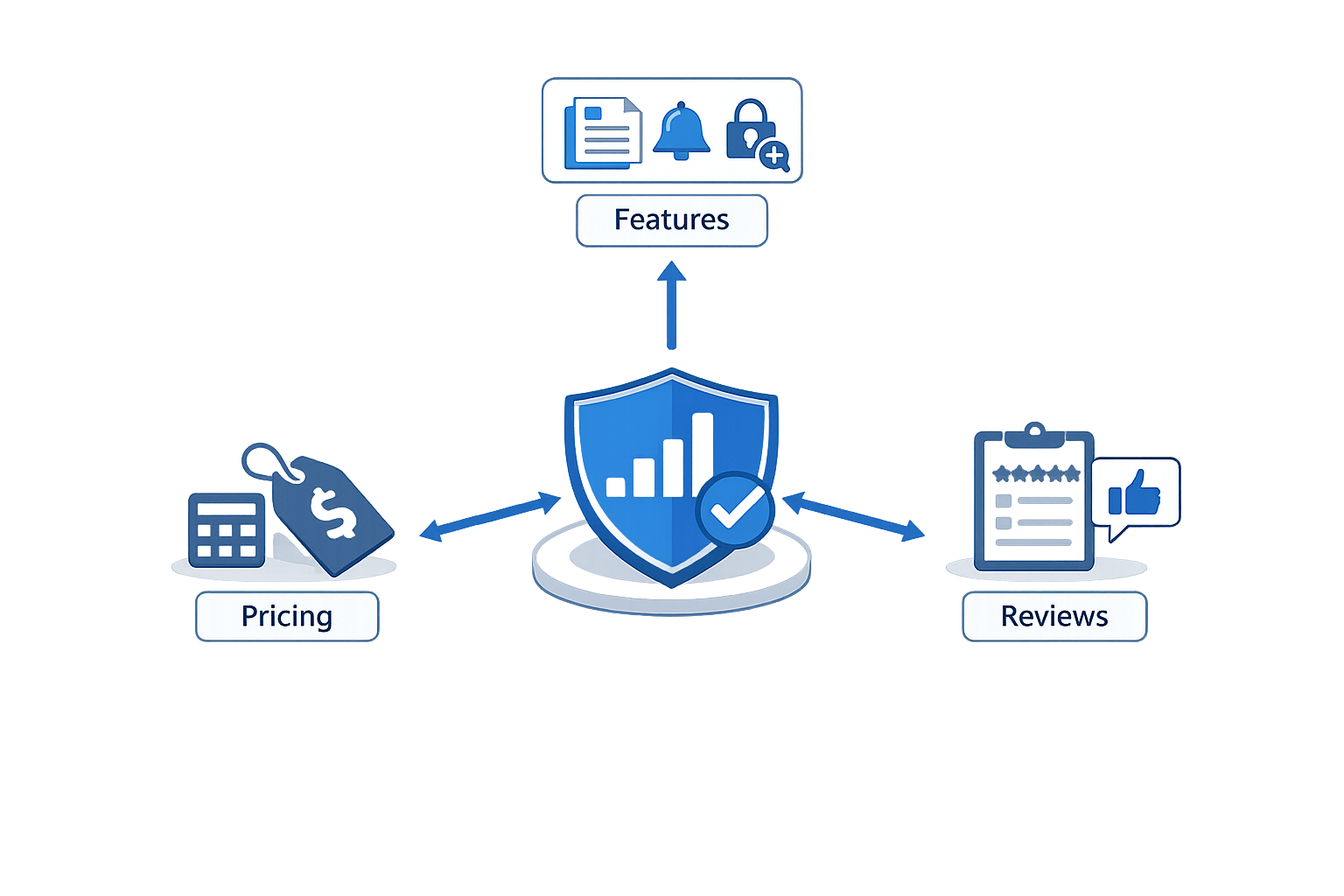
A credit monitoring service sends alerts when something changes on your credit file. It does not delete information, repair your credit, or guarantee that you will catch every fraudulent account before it appears on your statement. What it does is give you a notification window — the time between when a creditor reports a new tradeline and when you discover it yourself.
The value of that window depends on what the service monitors, how quickly it sends the alert, and whether you can act on the information it provides. Here is what to look for when you are choosing one.
Which Bureaus the Service Monitors
Some services pull from one bureau. Others pull from all three. A single-bureau monitor will miss activity that a creditor reports only to the other two bureaus. If you are monitoring because you suspect identity theft, coverage across Equifax, Experian and TransUnion is the safer choice.
Three-bureau monitoring costs more. If your goal is to track one known account or watch for new inquiries in your name, a single-bureau service may be enough. Check which bureau the service uses and confirm that the creditors you care about report to that bureau.
Alert Speed and Delivery Method
An alert that arrives three weeks after the event is not useful. Look for services that send notifications within 24 to 48 hours of a reportable change. Delivery method matters: email can sit unread, push notifications on a mobile app are harder to miss, and SMS arrives even when you are away from a computer.
Some services let you customize which events trigger an alert. If you do not care about soft inquiries but want to know immediately when a new account appears, that filter saves you from alert fatigue.
Online Account Access and Report Features
Most services provide access to your credit report or a summary of your file. Check whether the service shows the full report or a simplified version. A full report lets you identify the exact field that is wrong — the account number, the balance, the payment status — which you need when you are preparing a dispute.
Look for features like score tracking over time, a breakdown of the factors affecting your score, and the ability to download or print your report. These are not decorative. You will need them if you are comparing your file to a lender's decision or preparing documentation for a dispute about inaccurate information.
Customer Support Availability
When you receive an alert about a new account you did not open, you need to reach someone quickly. Check whether the service offers 24-hour support, and whether that support includes phone, chat or email. Some services provide support only during business hours, which means you wait until Monday if the alert arrives on a weekend.
If the service includes identity theft insurance or resolution assistance, confirm what that assistance covers. Some providers offer a case manager who will help you file reports and contact creditors. Others provide a phone number and a checklist. The difference matters when you are trying to freeze your file and notify issuers at the same time.
Pricing and What It Includes
Free services exist, but they typically monitor one bureau and offer limited alerts. Paid services range from around ten dollars a month for single-bureau monitoring to thirty or more for three-bureau coverage with added features like dark web monitoring or insurance.
Read what is included in the base price and what costs extra. Some services advertise three-bureau monitoring but charge separately for daily updates or mobile alerts. Others bundle identity theft insurance and credit lock features into the monthly fee.
The cheapest service is not always the one with the lowest advertised price — it is the one that includes the features you will actually use without charging for add-ons.
If the service offers a trial period, use it to confirm that the alerts arrive on time, the report is readable, and the support channel works. Cancel before the trial ends if the service does not meet the standard you need.
What a Credit Monitoring Service Does Not Do
A monitoring service does not remove negative items from your credit file. It does not improve your score by itself, and it does not prevent a creditor from reporting accurate information. The widely repeated claim that these services can force deletion is wrong. They alert you to changes; they do not adjudicate disputes or compel furnishers to withdraw a tradeline.
If you find an inaccuracy, you must follow the dispute process separately. That process is governed by regulations that require investigation and response within specific windows, but the monitoring service is not part of that procedure. It is a notification tool, not a dispute instrument.
How We Tested the Credit Monitoring Services

This article does not describe testing performed by the author. The comparison draws on publicly available information about how credit monitoring services operate, what they deliver, and what regulatory framework governs the credit reports they access.
What Credit Monitoring Services Do
Credit monitoring services watch your credit file for changes and send alerts when new activity appears. They do not remove information from your report. They do not dispute inaccuracies on your behalf unless you separately authorize a dispute through the service's interface. The monitoring function is separate from the dispute function.
The services pull reports from consumer reporting agencies described in section 603(p) of the Fair Credit Reporting Act, 15 U.S.C. 1681a(p). When a service obtains your report, it must comply with the permissible-purpose requirements in section 604(b) of the Fair Credit Reporting Act, 15 U.S.C. 1681b(b). You provide that permission when you sign up.
Criteria for Comparison
The comparison in this article evaluates services on the following:
- Bureau coverage: Whether the service monitors one bureau or all three (Equifax, Experian, TransUnion).
- Alert frequency: How often the service checks for changes and how quickly it notifies you.
- Score access: Whether you receive a credit score, which scoring model it uses, and how often it updates.
- Identity-theft features: Dark web monitoring, Social Security number tracking, and similar tools.
- Pricing: Monthly cost and whether a free tier exists.
These are the features services advertise. The comparison does not assess whether a given service prevents fraud or improves your score. Monitoring is a notification mechanism. It does not change the contents of your file.
What Monitoring Does Not Do
Credit monitoring does not:
- Prevent a creditor from furnishing information to a bureau.
- Remove accurate negative items from your report.
- Guarantee that you will catch fraud before it causes harm.
- Improve your score by itself.
If you find an inaccuracy, you dispute it under the procedures in Regulation V, 12 CFR part 1022, which governs furnisher duties. The monitoring service may offer a dispute interface, but the legal obligation to investigate belongs to the furnisher and the bureau, not the monitoring service. For more on how to improve your credit score through accurate reporting, see the linked guide.
Regulatory Context
When a service accesses your credit report, it does so under a permissible purpose. The Fair Credit Reporting Act limits who may obtain a report and for what reason. Your consent when signing up satisfies the permissible-purpose requirement for ongoing monitoring.
If the service furnishes information about you to a bureau—such as your payment history on a credit-builder loan the service offers—it becomes a furnisher and must comply with the accuracy and dispute obligations that apply to furnishers. Most monitoring services do not furnish; they only pull reports.
Frequently asked questions
What can a credit monitoring service actually do for me?
A credit monitoring service alerts you when changes appear on your credit file. That includes new accounts, inquiries, balance updates, and changes to public records. The service does not repair your credit, remove negative items, or change what furnishers report. It tells you what happened and when.
Some services include identity-theft insurance or resolution assistance. Those features help if someone opens an account in your name. The monitoring itself is a notification tool, not a correction mechanism.
Can a credit monitoring service delete negative items from my report?
No. A common misconception is that these services can force deletion of accurate negative information. The statutory text does not support that claim. The section typically cited pertains to disclosure, not deletion.
If you find an inaccuracy, you follow the dispute process outlined under Regulation V, which governs the accuracy of furnished information. The dispute goes to the furnisher or the bureau, depending on the type of error. The monitoring service may help you spot the error, but it does not file the dispute for you and cannot guarantee removal.
How often do credit monitoring services check my file?
Most services check daily. Some check weekly or when a specific trigger occurs, such as a new inquiry or account. The frequency depends on the service and the plan tier.
Daily monitoring means you receive an alert within 24 hours of a reportable change. Weekly monitoring batches changes and sends one summary. For fraud detection, daily is more useful. For general awareness, weekly may be enough.
Do I need to monitor all three bureaus?
It depends on what you are protecting against. Not every creditor reports to all three bureaus. A new account might appear on Experian but not TransUnion. If you monitor only one bureau, you miss changes reported to the other two.
Three-bureau monitoring costs more. If your goal is fraud detection, three-bureau coverage is worth it. If you are tracking your score for an upcoming application, check which bureau the lender pulls and monitor that one.
Will credit monitoring hurt my credit score?
No. Monitoring services use soft inquiries, which do not affect your score. A soft inquiry appears on your file but is visible only to you. Lenders do not see it, and scoring models ignore it.
Some services include score simulators or pre-qualification tools. Those also use soft inquiries. Hard inquiries occur only when you apply for credit, and the monitoring service does not trigger them.
What happens if the service finds fraud on my account?
You receive an alert. The service does not freeze your credit or contact creditors on your behalf unless that feature is included in your plan. You take the next steps: place a fraud alert or credit freeze, dispute the fraudulent account, and file a report with the FTC if needed.
Some services include identity-theft resolution specialists who guide you through the process. Others provide insurance that reimburses certain expenses, such as legal fees or lost wages. Read the plan details to know what is covered.
Are free credit monitoring services as good as paid ones?
Free services typically monitor one bureau and send alerts for major changes. Paid services monitor all three bureaus, provide more frequent updates, and include additional features such as dark-web monitoring, insurance, or credit-score tracking.
If you want basic fraud alerts and are willing to check your own reports, a free service works. If you want comprehensive coverage and tools, a paid service delivers more. Neither type removes negative items or changes what appears on your file.
Conclusion
Credit monitoring services alert you when something changes on your credit file. They do not repair your credit, delete negative items, or guarantee a score increase. What they do is send you a notice when a new account appears, when an inquiry is logged, or when a balance shifts. That notice gives you a window to act — to dispute an error, to freeze your file, or to contact the furnisher directly.
A common misconception is that these services can directly delete negative items from your credit report. The statutory text does not support it. The section typically cited pertains to disclosure, not deletion. If you find inaccuracies, you must follow the dispute process outlined under Regulation V, which governs the accuracy of furnished information. This regulation ensures that your disputes are investigated, but it does not guarantee the removal of items unless they are proven inaccurate.
When choosing a service, focus on what the alert tells you and how quickly it arrives. Look at which bureaus are monitored, whether identity-theft insurance is included, and what the notice looks like when it lands in your inbox. The cheapest option is the one that monitors the bureaus your lenders report to and sends alerts you will actually read.
Understanding these distinctions helps in selecting a service that aligns with your needs — monitoring and alerting rather than promising unrealistic outcomes. For broader guidance on maintaining account security, see How to Protect Your Bank Account From Fraud in 2025. There is no reason you would have known all of this before you started looking. Now you do.