Introduction
Wells Fargo Online Banking Security is a platform that allows customers to manage their accounts securely. When a financial institution faces regulatory enforcement actions, the ripple effects reach the mechanisms you use to check balances, dispute errors, and submit requests. Wells Fargo Online Banking Security infrastructure underwent changes after consent orders and settlements stemming from account-opening practices and servicing lapses between 2016 and 2020. These changes were not cosmetic updates to a login screen—they involved how the institution handles error notices, maintains records, and routes borrower communications through digital channels.
The term "security" in this context means more than password strength or two-factor authentication. It includes the policies and procedures a servicer must maintain under federal regulation to ensure you can access accurate information about your account and that your disputes reach the correct intake process. Under 12 CFR 1024.38(a), a servicer is required to maintain policies and procedures reasonably designed to provide timely and accurate information. When those procedures fail or when intake channels are unclear, your notice of error may sit unprocessed, and the statutory response clock may never start.
If you have a mortgage serviced by Wells Fargo, the way you submit a notice of error or request for information today differs from the options available before the regulatory settlements. The institution may offer an online intake method for error notices, but that process is in addition to—not in lieu of—the mail process that federal regulation guarantees. This happens to a lot of people: they assume the web form is the only option, send their dispute that way, and later discover the servicer claims it never received a compliant notice. Knowing which channel triggers the regulatory timeline and what documentation you need to keep is not about being suspicious; it is about understanding how mortgage servicing mechanisms work and where your payment goes.
The changes Wells Fargo implemented after the scandals are not unique to one institution—they reflect what federal servicing regulations require of all covered servicers. What makes them noteworthy is the enforcement context: the consent orders and settlements created a public record of where the procedures fell short, and the remediation plans describe what the institution agreed to fix. You do not need to know the details of every settlement to protect your account, but you do need to know what the law requires in response to your notice and what to do if the answer is inadequate.
Problem Statement
When a bank's servicing mechanisms fail to protect customer information or handle disputes properly, the consequences extend beyond headlines. Accounts can be opened without authorization, statements can show transactions the customer never made, and the channels meant to report those errors can themselves become part of the problem. Wells Fargo Online Banking Security became a focal point not because of a single breach, but because the institution's internal controls allowed unauthorized activity to persist across millions of accounts.
What Went Wrong
The core issue was not a technical vulnerability in the online platform itself. Instead, employees opened deposit and credit accounts using customer information without consent, often to meet sales targets. Customers discovered these accounts through credit monitoring, unexpected fees, or declined transactions. When they tried to report the problem, the intake channels—phone, branch, and online forms—did not always route the complaint to a team with authority to investigate or correct the record.
Under Regulation X, a servicer may establish an online intake process for notices of error, but that process must be exclusive and clearly communicated. The regulation does not require a servicer to accept error notices online, but if it does, the online channel must be in addition to mail, and the servicer must designate which online method is the official intake route. When multiple portals exist and none is clearly marked as the dispute channel, customers send the same notice repeatedly, unsure whether it was received or routed correctly.
Why the Mechanism Matters
The same principle applies to requests for information. A servicer may accept information requests online, but any such process must be exclusive and supplemental to mail. If a customer submits a request through a portal that is not the designated intake method, the servicer has no regulatory obligation to respond within the required window. This creates a gap: the customer believes the request was filed, the servicer's compliance system never logs it, and weeks pass without a response.
For Wells Fargo customers, this gap meant that even legitimate disputes about unauthorized accounts could sit unaddressed while the account continued to report to credit bureaus or accrue fees. The online banking platform displayed the account, but the platform's own messaging or support forms were not always the correct channel to dispute it. Customers who did not know to send a written notice by mail—or who assumed the online form was sufficient—found themselves outside the regulatory framework designed to protect them.
The online intake process for notices of error must be exclusive, ensuring that users know where to report issues and that the servicer's compliance system recognizes the submission.
Understanding how these intake mechanisms work is essential when reviewing your own account activity. If you see a line item you did not authorize, knowing which channel to use and what language triggers a regulatory response can determine whether the issue is resolved in thirty days or not at all. For more on how payments are held or applied in ways that affect your statement, see Mortgage Suspense Accounts: Where Your Short Payment Goes.
Solution Steps Taken by Wells Fargo
Following regulatory scrutiny, Wells Fargo implemented written policies and procedures designed to ensure and monitor compliance across the institution and its employees. Federal regulations require depository institutions to establish frameworks appropriate to the nature, size, complexity, and scope of their operations. These policies address both employee conduct and the systems that support customer accounts.
The compliance monitoring framework applies to the institution, its subsidiaries, and their employees. Written policies must be maintained and updated as the institution's activities evolve. This is not a one-time project; it is an ongoing obligation that regulators expect to see documented and enforced.
What the Framework Requires
The regulation specifies that policies must be reasonably designed to ensure compliance. "Reasonably designed" means the institution must identify risks, assign responsibility for monitoring, and create processes to detect and correct violations. The framework is not optional, and it is not limited to front-line staff — it extends to management and subsidiaries.
For customers, this means the institution is required to have systems in place to prevent the kinds of lapses that led to past enforcement actions. The policies govern how accounts are opened, how access is granted, and how discrepancies are identified and reported. If you notice an issue with your account, the institution's compliance framework is the mechanism that should flag and correct it.
Monitoring and Enforcement
Compliance monitoring is a separate requirement from policy creation. The institution must not only write the policies but also maintain systems to verify that employees follow them. This includes audits, training records, and escalation procedures when a violation is detected. The regulation does not specify the exact method of monitoring, but it does require that the method be appropriate to the institution's scope of activity.
If you are concerned about whether a specific security measure is in place, you can submit a request for information under applicable servicing regulations. The institution must respond within the statutory window. Keep the tracking number and note the date you sent the request — the clock starts when the servicer receives it, not when you mail it. For more on how servicing timelines work, see Mortgage Suspense Accounts: Where Your Short Payment Goes.
The compliance framework also requires that policies be updated as the institution's activities change. A bank that adds new digital services or expands into new product lines must revise its monitoring procedures accordingly. This is an area where regulatory expectations have increased — static policies that do not evolve with the institution's risk profile are not considered reasonably designed.
How Does Wells Fargo Online Banking Security Protect Your Account?
Wells Fargo Online Banking Security is not a set-it-and-forget-it arrangement. The tools are there, but you have to use them. Here is what that means in practice: checking your statement, managing your notifications, and knowing where to send a question when something looks wrong.
Check Your Statement Regularly
Your periodic statement shows account activity, outstanding principal, and contact information. Under 12 C.F.R. § 1026.41(d)(6), the servicer must include a toll-free telephone number and an electronic mailing address on the front page. That contact information is there so you can ask about anything that does not make sense. If you see a transaction you did not authorize or a fee you do not recognize, the clock starts when you notice it — not when the servicer decides to tell you.
Many people assume they will get an alert for every unusual event. That is not how it works. Alerts are optional; the statement is required. Set a calendar reminder to review your statement at least once a month. Look at the transaction list, the balance, and any fees or holds. If something is off, write it down with the date and the amount.
Manage Your Notification Preferences
Under the interpretive guidance at 12 C.F.R. § 1026.41, Interp-41(a)-4, you cannot opt out of receiving periodic statements altogether. You can, however, opt out of receiving notifications that a new statement is available — but only if you have demonstrated the ability to access statements online. That means logging in, viewing the statement, and selecting the option to stop receiving alerts.
This is a right, not a favor. If you prefer to check your account on your own schedule rather than respond to email prompts, you are allowed to do that. The trade-off is that you have to remember to log in. If you forget for three months and miss a problem, the servicer will point to your opt-out choice. Keep the tracking number or confirmation email when you change your notification settings, so you have a record of what you selected and when.
Use Strong, Unique Passwords and Enable Two-Factor Authentication
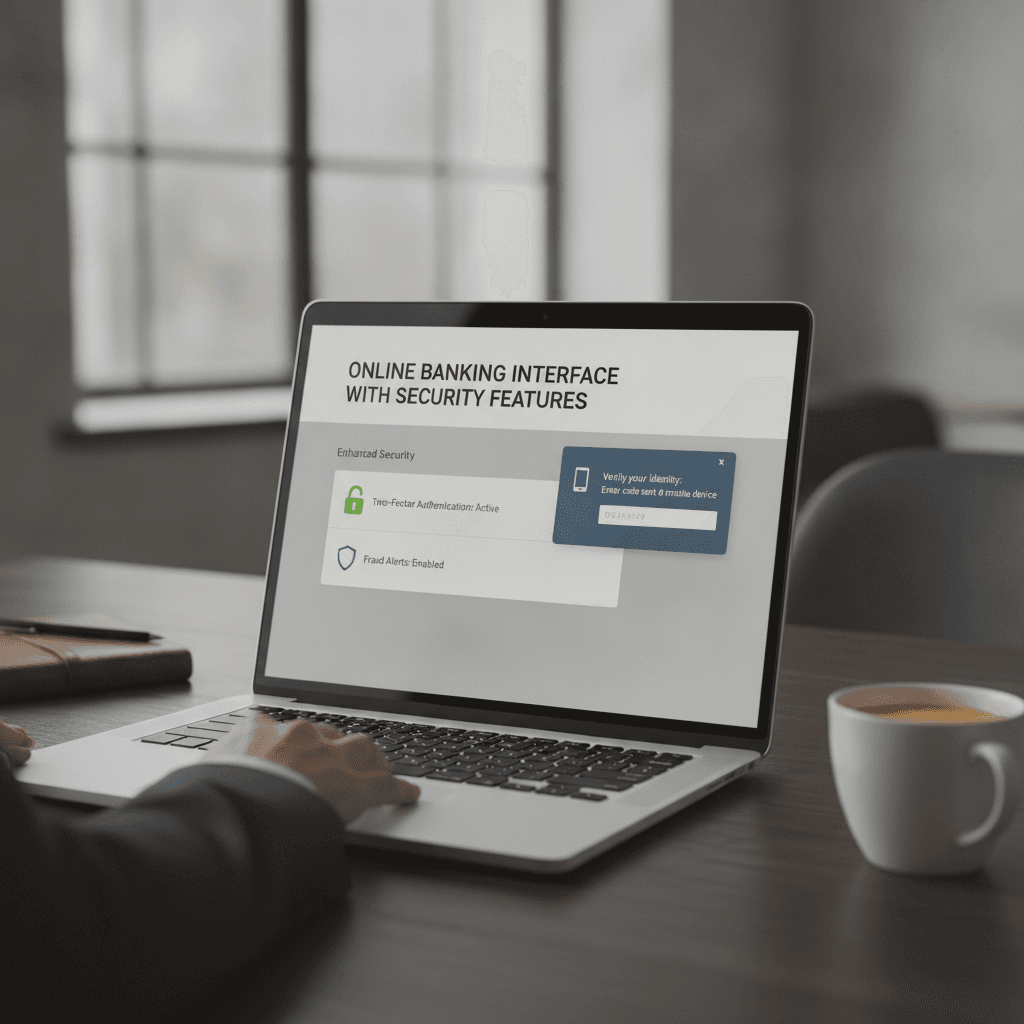
Wells Fargo offers two-factor authentication for online banking. Turn it on. A strong password and a second verification step make it much harder for someone else to access your account, even if they have your login credentials. Do not reuse the same password across multiple sites. If one site is breached and your password is leaked, anyone with that list can try it on your bank account.
Password managers can generate and store unique passwords for each account. If you are not using one, write your passwords down and keep the list in a secure place — not on a sticky note attached to your monitor. The widely repeated version of password advice is wrong: a written list in a locked drawer is safer than the same password on twelve websites.
Review Your Account Activity for Unfamiliar Transactions
Log in at least once a week and scan the recent transaction list. Look for charges you do not recognize, even small ones. Fraudulent activity often starts with a test transaction to see if the account is monitored. If you see something unfamiliar, call the number on your statement immediately. Do not wait for the monthly statement to arrive.
If you are also managing mortgage suspense accounts or short payments, the same monitoring habit applies: check where your money went and whether it was applied as you intended.
Keep Your Contact Information Current
If your phone number, email address, or mailing address changes, update it in your online banking profile. The servicer sends notices and confirmations to the contact information on file. If those messages go to an old address, you will not see them, and the servicer will assume you did. Missing a notice does not stop the clock on a response window or a payment due date.
What Should You Do If You Find an Error?
If you spot a mistake — a payment applied to the wrong loan, a fee you were not told about, a transaction you did not make — you can send a notice of error under 12 C.F.R. § 1024.35(e)(1). The servicer has to respond by either correcting the error and sending you written confirmation with the effective date and contact information, or explaining why the statement is correct.
Put the request in writing. Use the mailing address or email address listed on your statement. Include your loan number, the date of the error, and what you believe is wrong. Keep a copy of what you sent and the date you sent it. If you use certified mail, keep the tracking number. The servicer's response obligation does not begin until they receive your notice, so proof of delivery matters.
The contact information on your statement is not decoration — it is the channel the law requires the servicer to maintain for exactly this kind of question.
What to Do If the Answer Is Inadequate
If the servicer responds to your notice of error but the answer does not resolve the problem, you can escalate. File a complaint with the Consumer Financial Protection Bureau or your state banking regulator. Include copies of your original notice, the servicer's response, and any other documentation. The complaint does not guarantee a specific outcome, but it creates a record and triggers a review.
None of this is legal advice. These are the mechanisms the regulations describe and the steps you are allowed to take. If you are not sure whether something on your account is an error or whether you have a claim, consult a lawyer or a housing counselor. What you can do on your own is check your statement, ask questions in writing, and keep records of what you sent and when.
For additional guidance on mortgage servicing procedures and timelines, see Reinstatement of Mortgage: Requirements and Disclosures and How Long Can I Keep My House in Loss Mitigation?.
Conclusion
The mechanisms that govern Wells Fargo Online Banking Security are not static. Wells Fargo has implemented technical controls and disclosure procedures in response to regulatory expectations and public scrutiny, but the effectiveness of those measures depends on how you use them. Periodic statements, electronic notifications, and error-resolution channels exist because federal servicing rules require them — not because an institution volunteered them.
What matters now is what you do with the tools you have. Check your statement every month for activity you do not recognize. If something looks wrong, send a written notice of error and keep the tracking number. Servicers must respond within specific windows; if nothing arrives by the deadline, that is a fact you can document. The regulations that apply to mortgage servicing and consumer account disclosures are listed in the sources below, and they are the reason you have the right to ask for information and dispute errors in writing.
Ongoing vigilance means reading what arrives, whether on paper or electronically, and acting when the numbers do not match what you expected. None of this is legal advice, but it is how the servicing mechanism works. If you need more detail on how partial payments are held or how to reinstate a loan after a lapse, see Mortgage Suspense Accounts: Where Your Short Payment Goes and Reinstatement of Mortgage: Requirements and Disclosures. The widely repeated version of online banking security is that you can trust the institution to catch everything; the accurate version is that you have to check, and the law gives you the procedure to use when you find a problem.
FAQ
What is Wells Fargo Online Banking Security?Wells Fargo Online Banking Security is the set of policies, procedures, and technical controls the institution maintains to protect customer accounts and ensure compliance with federal servicing regulations. It includes password protection, two-factor authentication, error-reporting channels, and the systems that route notices of error to the correct intake process.
How do I report an error on my Wells Fargo account?Send a written notice of error to the mailing address or email address listed on your periodic statement. Include your loan number, the date of the error, and a description of what you believe is wrong. Keep a copy of your notice and proof of delivery. The servicer must respond within the statutory window once they receive your notice.
Can I submit a notice of error through the Wells Fargo website?Wells Fargo may offer an online intake process for notices of error, but any such process must be in addition to the mail process required by Regulation X. If you are unsure which online channel is the designated intake method, send your notice by certified mail to ensure it triggers the regulatory response timeline.
What changed after the Wells Fargo scandals?Wells Fargo implemented written compliance policies and monitoring systems in response to consent orders and settlements. The changes address how accounts are opened, how error notices are routed, and how the institution maintains records of borrower communications. These policies are required under federal regulation and apply across the institution and its subsidiaries.
How often should I check my Wells Fargo account?Review your periodic statement at least once a month. Log in at least once a week to scan recent transactions. Look for charges or fees you do not recognize, even small ones. If you see something unfamiliar, call the number on your statement immediately.