Introduction
Chase fraud protection is a set of mechanisms that determine what happens when an unauthorized charge appears on your statement. You did not make the purchase, you do not recognize the merchant, and nothing in your recent activity explains it. What happens next depends on which bank holds your account and how its fraud-protection mechanism works.
Banks describe their fraud protection in similar terms: monitoring, alerts, zero liability. The differences emerge when you file a claim. One institution might restore the funds within two business days while you wait for the investigation to close. Another might require a signed affidavit before any provisional credit appears. A third might treat the same transaction as a merchant dispute rather than fraud, which triggers a different process and a different timeline. These are not small distinctions when your rent check is about to clear.
Federal rules require your periodic statement to show a toll-free number and an electronic contact method so you can obtain information about your account. That is the starting point, not the finish line. What you send, where it goes, and what the institution must do in response—those details vary. This article walks through the procedural mechanics: what Chase provides, how other large banks structure their fraud response, and what to do if the answer you receive is inadequate. For related account-monitoring issues, see Mortgage Suspense Accounts: Where Your Short Payment Goes for an example of how payment application can create confusion even when no fraud occurred.
You were not careless. Here is how the mechanism works and here is what you can send.
Understanding Online Banking Fraud Risks
Online banking moves money instantly, which means fraud can drain an account before you notice. The speed that makes digital banking convenient also compresses the window to catch unauthorized activity. Understanding the categories of risk helps you recognize what to watch for on your statement and what protections apply when something goes wrong.
Common Types of Online Banking Fraud
Phishing attacks arrive as emails or texts that mimic your bank's branding and ask you to verify account details or click a link. The page looks real, you enter credentials, and the attacker now has login access. Account takeover happens when someone uses stolen credentials to change your contact information, add external accounts, and initiate transfers before you realize your phone number or email address no longer works for account alerts.
Unauthorized transactions can result from compromised debit cards, stolen checks, or ACH debits you never approved. The transaction posts, your balance drops, and unless you review your statement line by line, the charge may sit unnoticed for weeks. Each fraud type triggers different liability rules and response timelines, so recognizing the category matters when you file a dispute.
Consequences Beyond the Immediate Loss
When fraud drains your checking account, rent checks bounce, autopay fails, and overdraft fees stack up. You file a dispute, the bank investigates, and during that window your money is tied up unless provisional credit applies. Even after the bank reverses the fraudulent charges, you may spend weeks unwinding the secondary damage: late fees from billers, returned-payment marks on your credit file, and the administrative effort of re-linking accounts.
For mortgage holders, fraud that disrupts your payment can create force-placed insurance and escrow account impact complications if the servicer does not receive the scheduled transfer. A single missed payment due to account takeover can trigger a cascade of notices and fees that take months to resolve, even after the fraud claim closes.
The secondary costs of fraud—bounced payments, late fees, and the time spent on dispute calls—often exceed the amount stolen.
Fraud also exposes you to identity theft if the attacker accesses personal information stored in your account messages or uploaded documents. Once your Social Security number, date of birth, or account numbers are in circulation, the risk extends beyond one compromised login. Monitoring your credit file and freezing your reports become necessary steps, adding another layer of administrative burden to an already stressful situation.
Understanding these risks is not about assuming the worst. It is about knowing what protections exist, what timelines apply, and what you can do to contain the damage when unauthorized activity appears on your statement.
How Does Chase Fraud Protection Work?
Chase fraud protection provides several mechanisms for account monitoring and customer contact, though the specific features you see depend on your account type and how you access your account. All Chase online banking customers receive account statements that include contact information—a toll-free telephone number and an electronic mailing address—on the front page. These are the channels through which you can obtain information about your account, report suspicious activity, or ask questions about transactions you do not recognize.
What Chase Discloses on Your Statement
Your periodic statement shows the outstanding principal balance and transaction history. This is the primary document you use to verify that every charge, withdrawal, and transfer matches your records. If you see a line item you did not authorize, the contact information on the front page is where you start. Chase, like other large banks, is required to provide this contact information in a standardized location so you do not have to hunt for a number when you need to report a problem.
How to Report Unauthorized Activity
When you identify a transaction you did not authorize, call the toll-free number on your statement or send a message through the electronic mailing address listed there. Chase will ask you to describe the transaction and the date it posted. The bank's response timeline and your liability depend on how quickly you report the problem and whether the transaction involved your debit card, credit card, or direct account access. For debit and ATM transactions, federal rules give you stronger protection the sooner you report—waiting more than two business days after you learn of the loss can increase your liability, and waiting more than sixty days after the statement is sent can leave you fully liable for unauthorized transfers that occur after that window.
Comparing Chase to Industry Practice
All federally regulated banks must provide account contact information on periodic statements, so this baseline is the same whether you bank with Chase, a regional institution, or a credit union. Where banks differ is in the additional monitoring tools they offer—real-time transaction alerts, biometric login, and the ability to lock your card through a mobile app. Chase has invested in mobile-app features that let you freeze a debit card instantly and receive push notifications for transactions over a threshold you set. Not every bank offers these tools, and not every customer enables them.
The contact information on your statement is not optional; it is a regulatory requirement that ensures you have a clear path to report problems and ask questions about your account.
What you do with that contact information matters more than which bank's name is on the statement. If you wait weeks to review your statement or ignore alerts, even the most sophisticated monitoring system cannot protect you. The law gives you a narrow window to report unauthorized transactions, and that window starts when you receive the statement or when you learn of the problem—whichever comes first.
What Can You Do to Maximize Your Fraud Protection?
The features a bank offers are one part of the equation. What you do with your account is the other. Here are steps you can take to reduce your exposure, no matter where you bank.
Review Your Statement Every Billing Cycle
Your periodic statement lists every transaction. Check it as soon as it arrives. If you see a charge you do not recognize, contact the bank right away. The regulation that requires monthly statements also requires that the statement include a toll-free telephone number and an electronic mailing address you can use to ask questions about your account. That contact information appears on the front page of the statement.
If you wait, you may miss the window to dispute unauthorized activity. The clock starts when the statement is mailed or delivered, not when you open it.
Use Strong, Unique Passwords and Enable Two-Factor Authentication
A password that appears in a data breach can be tested against your bank login within hours. Use a password manager to generate a unique password for your bank account. Do not reuse passwords across sites.
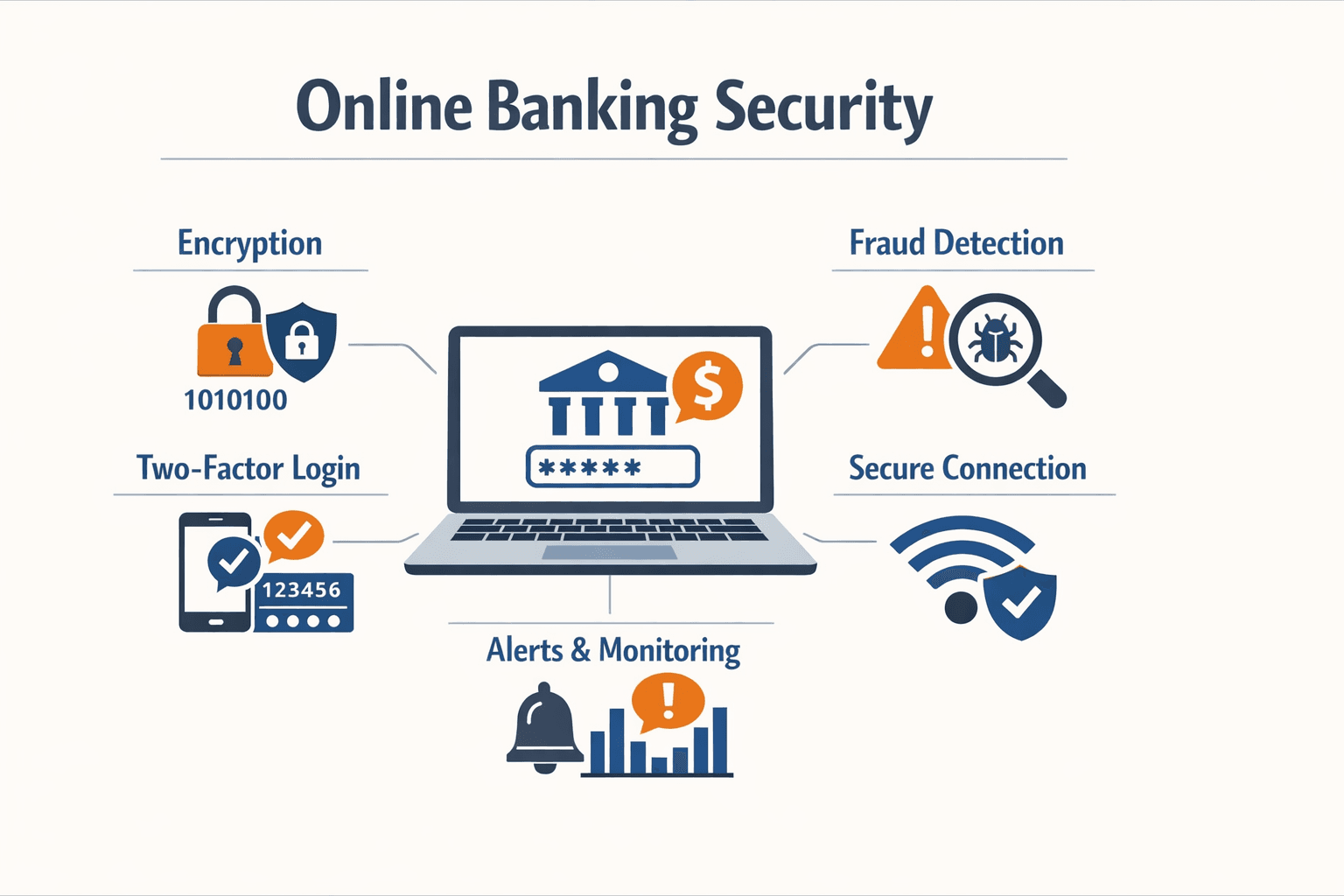
Two-factor authentication adds a second verification step — usually a code sent to your phone or generated by an app. Even if someone obtains your password, they cannot log in without that second factor. Most banks now offer this feature. Turn it on.
Monitor Your Account Between Statements
You are not required to log in daily, but doing so helps you spot problems early. If a charge posts that you did not authorize, you can report it the same day. The sooner you report, the sooner the bank can investigate and, if appropriate, issue provisional credit.
Some banks send real-time alerts when a transaction exceeds a threshold you set or when a purchase is made in a category you flag. Enable those alerts. They cost nothing and they give you a notification before the statement closes.
The features a bank offers matter, but what you do with your account determines how quickly you catch a problem and how much documentation you have when you report it.
Keep Records of Your Communications
If you report fraud or dispute a transaction, keep a record of the report. Note the date, the name of the representative you spoke with, and any reference number you receive. If you send a written dispute, keep a copy and the tracking number if you mail it.
These records matter if the bank's response is delayed or inadequate. If you need to escalate the matter to a regulator, you will be asked when you first reported the problem and what the bank told you. A mortgage suspense account dispute, for example, often turns on whether the servicer applied a payment correctly and whether you documented your objection in writing.
Understand What the Bank Will and Will Not Cover
Fraud protection does not mean every disputed charge will be reversed. The bank investigates, and the outcome depends on what the investigation shows. If the transaction was authorized — even if you regret it — the bank is not required to reverse it.
Read the account agreement. It explains what qualifies as unauthorized use, what your liability is, and how quickly you must report. The widely repeated version of this is wrong: you do not have unlimited time to dispute every charge. The agreement sets the deadlines, and they vary by account type.
Conclusion
Chase fraud protection is not a feature you shop for like a rewards rate. It is a baseline mechanism that federal regulation requires every bank to provide, and the differences between institutions are narrow. Chase, Bank of America, Wells Fargo and other large banks all offer zero-liability policies, real-time alerts, and dispute rights under Regulation E and Regulation Z. What varies is how quickly you receive a notification, how easy the mobile app makes it to freeze a card, and whether the institution's statement gives you the contact information you need when something looks wrong.
The law does not require a bank to prevent every unauthorized transaction before it posts. What the law requires is a clear process for you to report the problem, a reasonable timeline for the institution to investigate, and provisional credit while that investigation is underway. Chase's alerts and app controls are competitive, but they do not eliminate your responsibility to review your account regularly. A fraud-protection feature that you never check is no protection at all.
If you are comparing banks, focus on the mechanics that matter: how fast you see an alert, how many steps it takes to lock a card, and whether the statement layout makes it easy to spot a problem. The zero-liability promise is the same everywhere. The difference is in how much friction stands between you and the action you need to take. For more on how servicing disclosures work and what your statement must include, see Mortgage Suspense Accounts: Where Your Short Payment Goes.
You were not careless if a fraudulent charge appears. Fraud happens to a lot of people, and the dispute process exists because the law recognizes that. What you control is how quickly you act once you notice the problem, and whether you keep the documentation that shows when you reported it. None of this is legal advice, but it is how the mechanism works.